Brick Fireplace Refaced with Greenwich Gray Ledgestone
BEFORE the Restoration
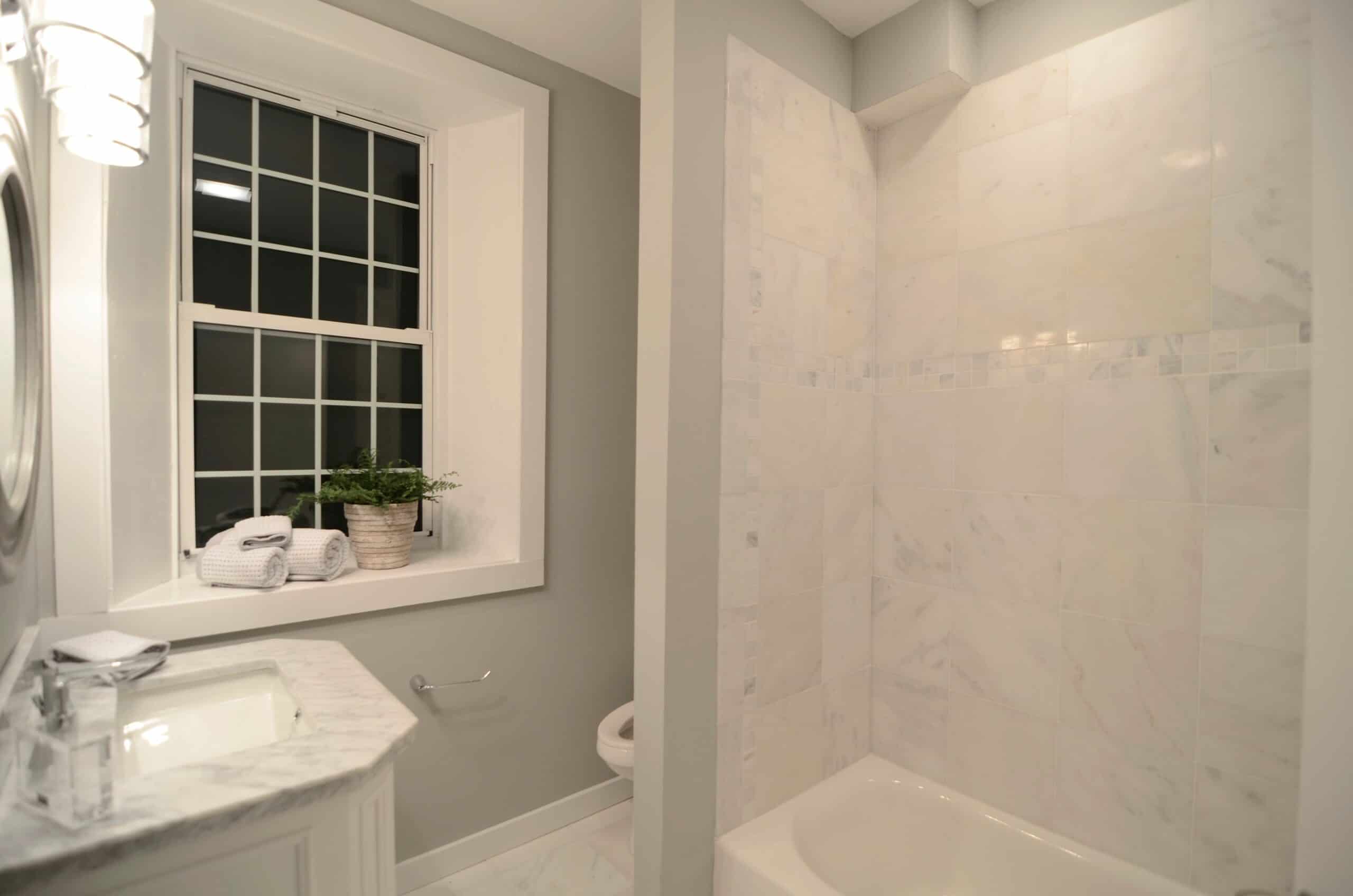
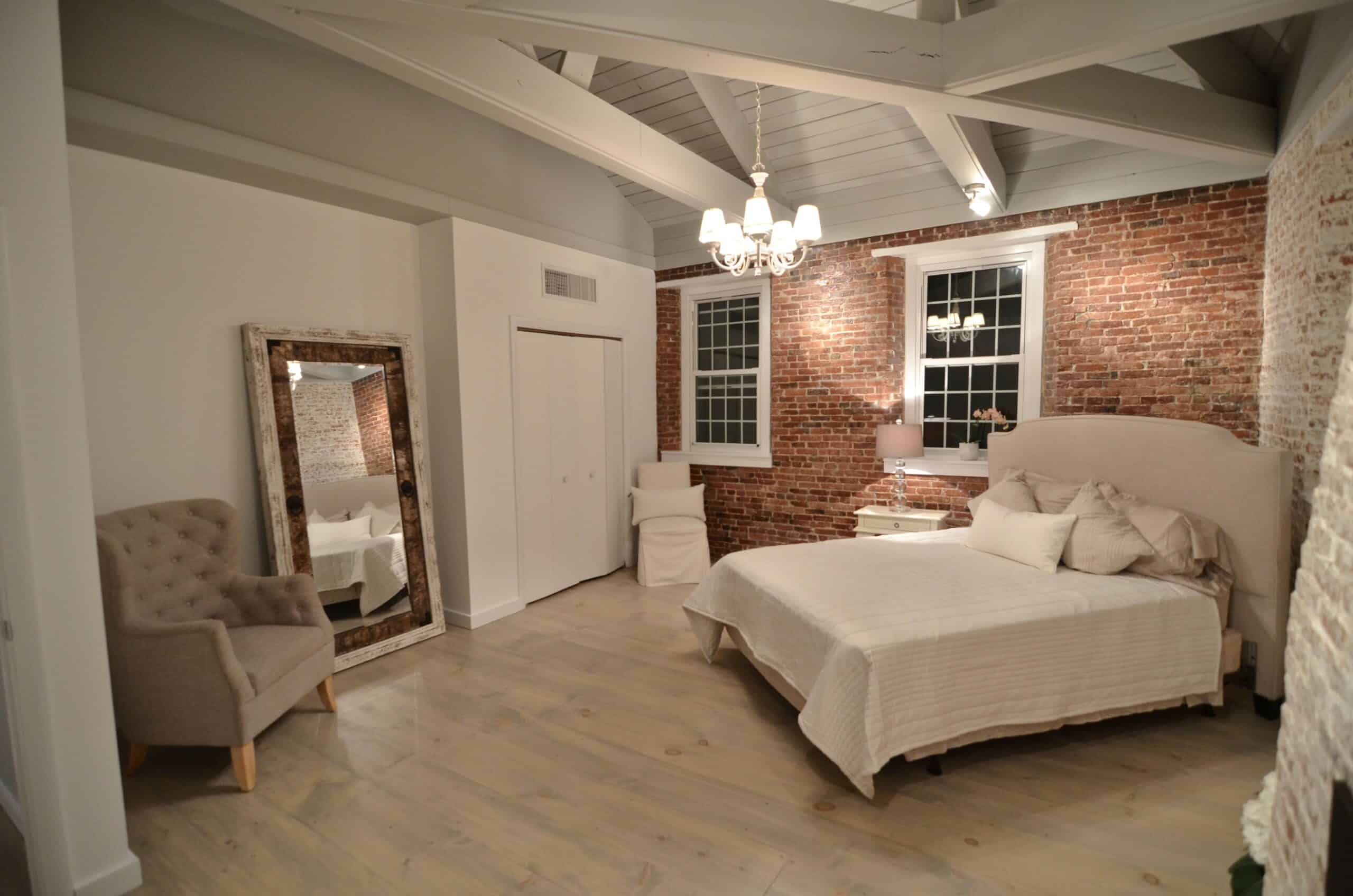
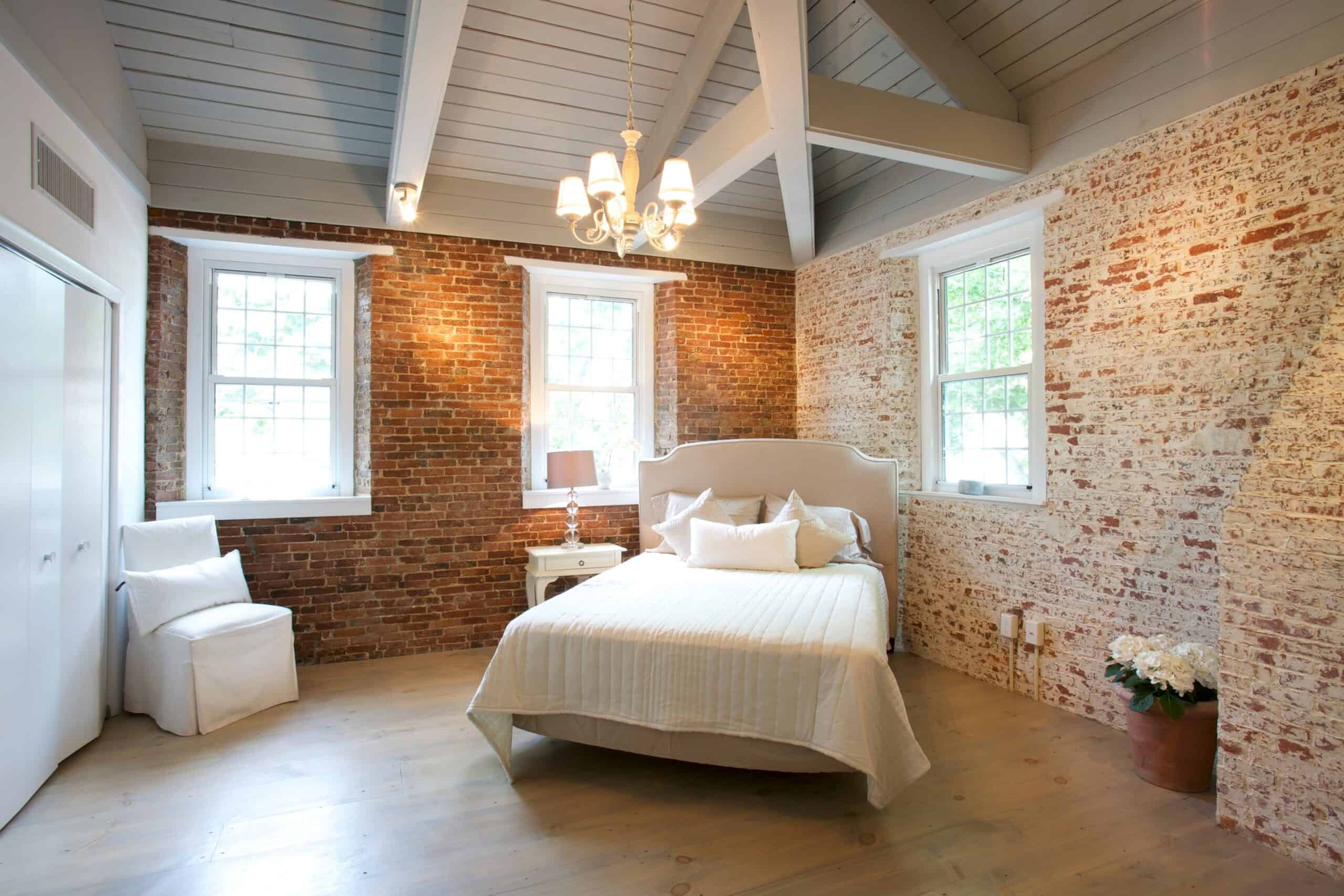
An 1820s-era brick townhouse was purchased and restored on the A&E television show Flipping Boston “Trouble and Strife” episode. Pete and Dave of CityLight Homes were able to transform the outdated (with some areas in disrepair) property while preserving its historic New England charm. There were some major structural challenges and differences in opinion about the design that the team needed to overcome, but the finished product was well worth the journey.
DURING Construction
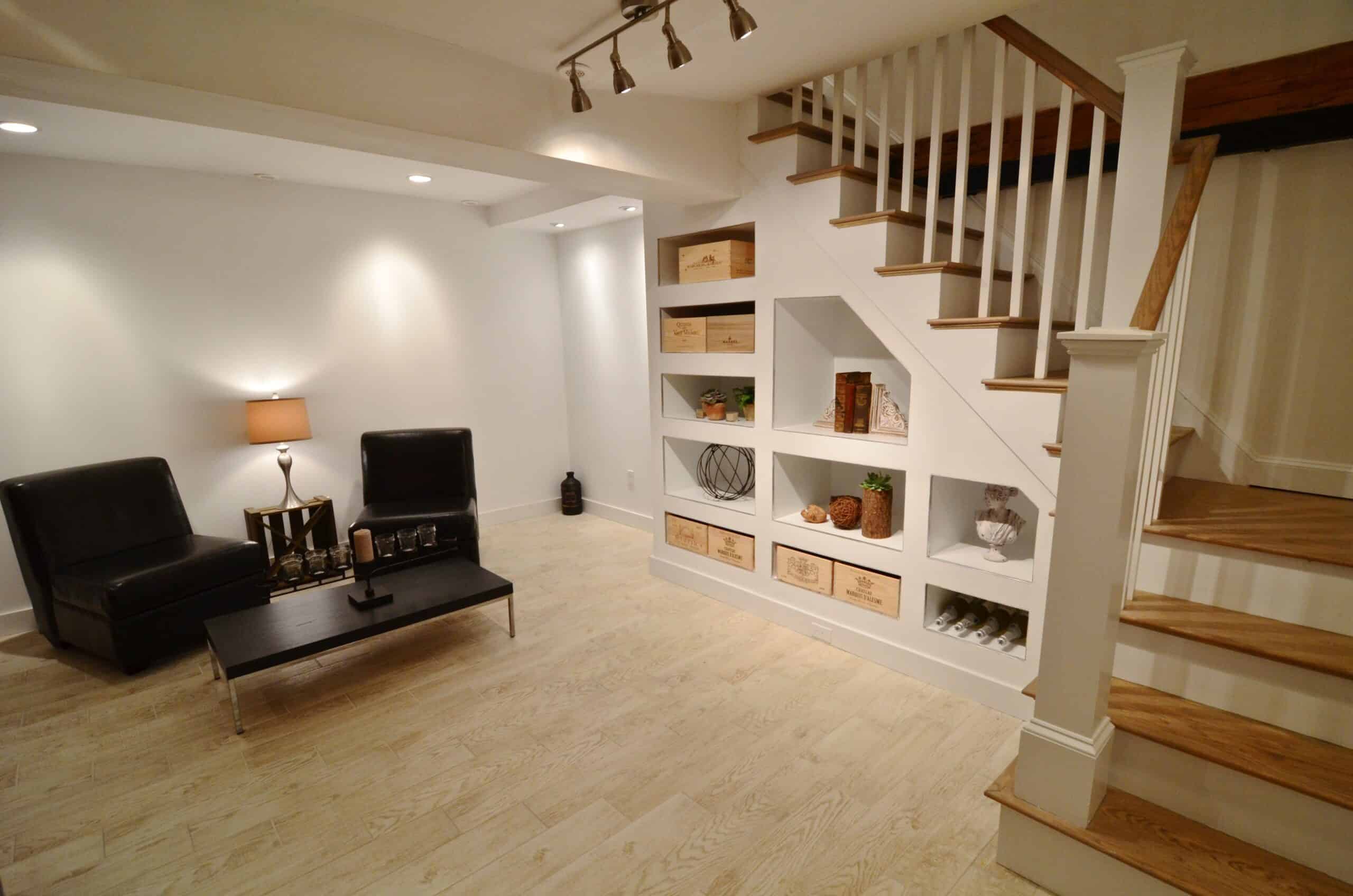
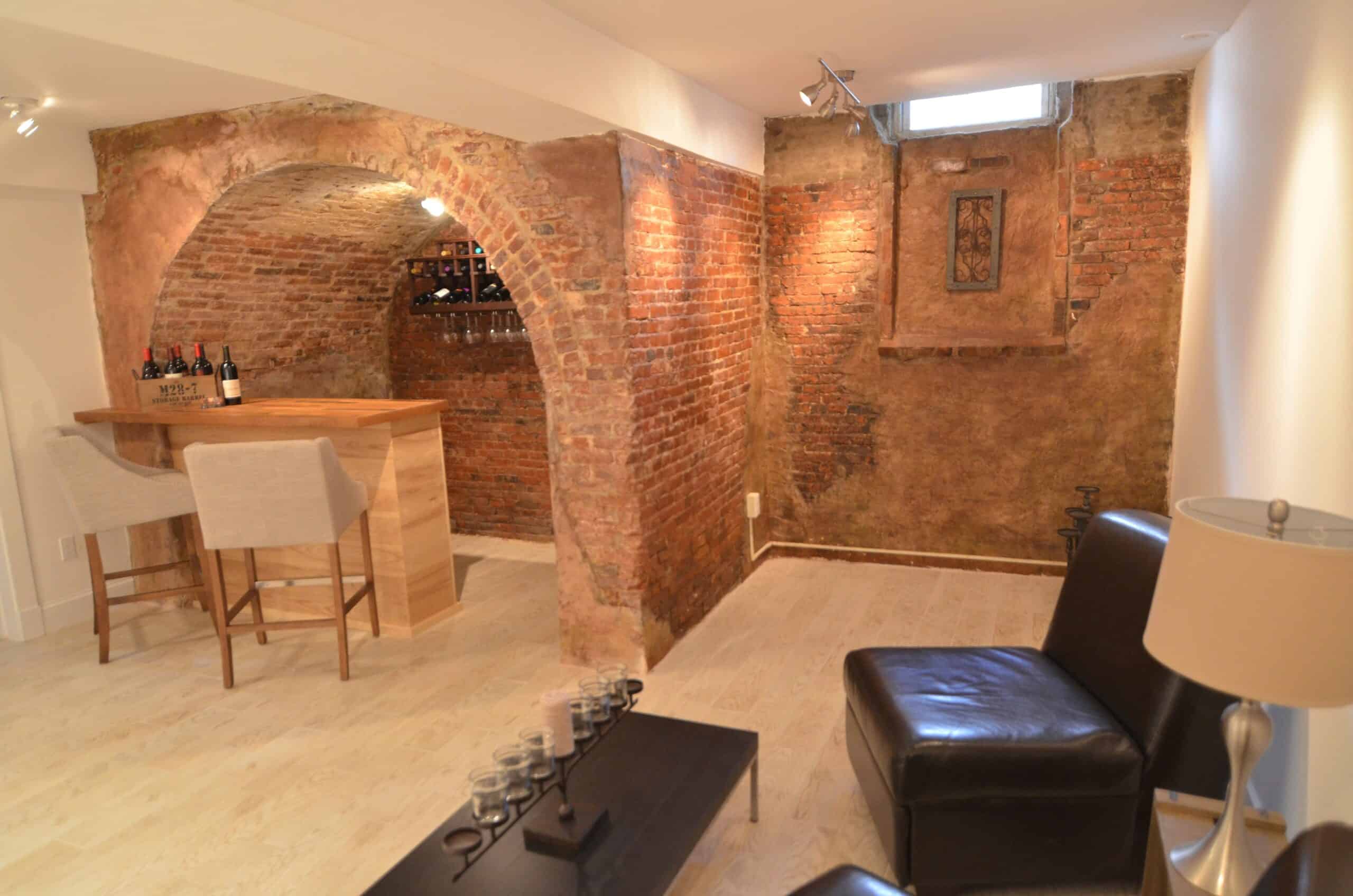
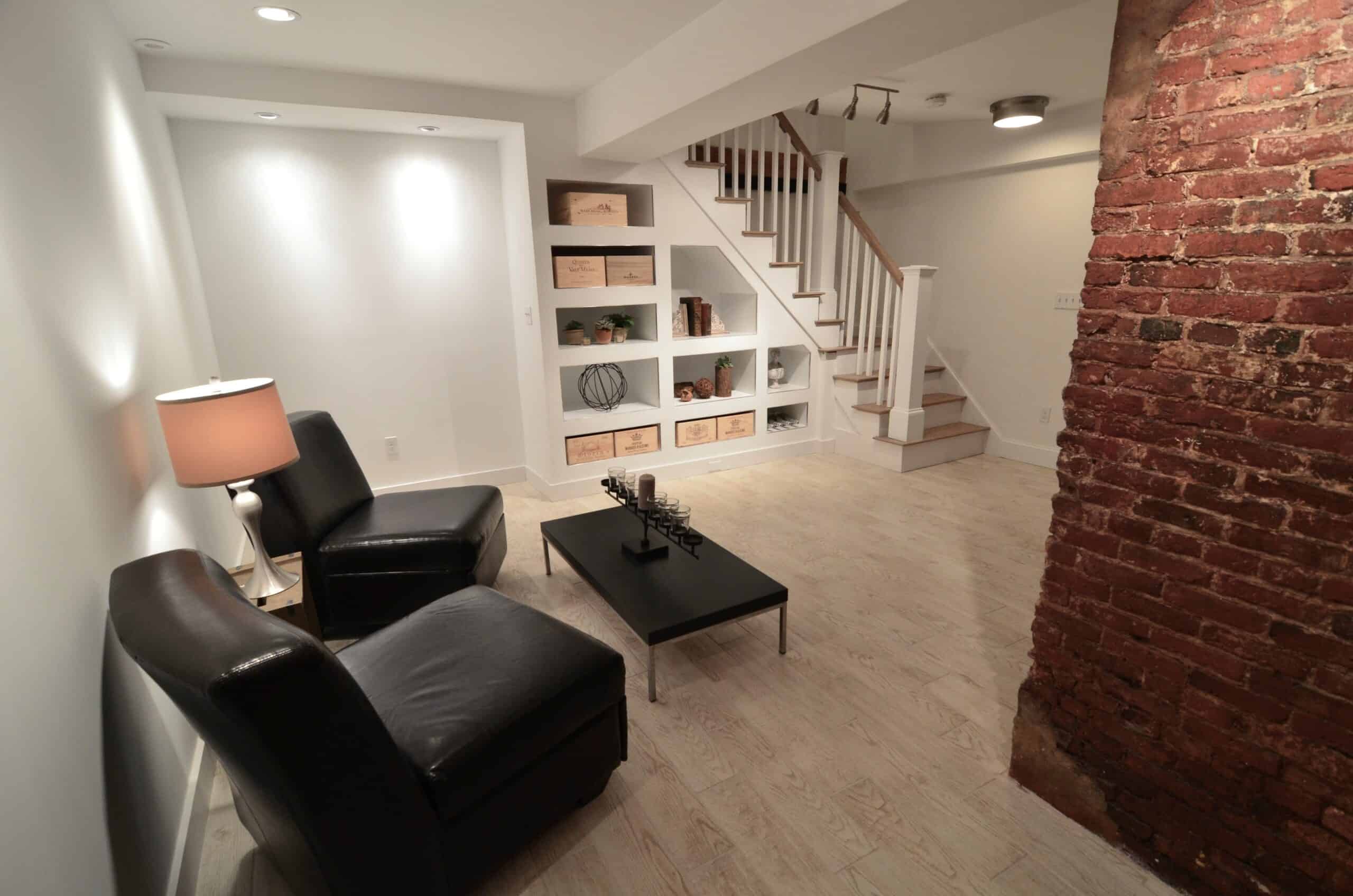
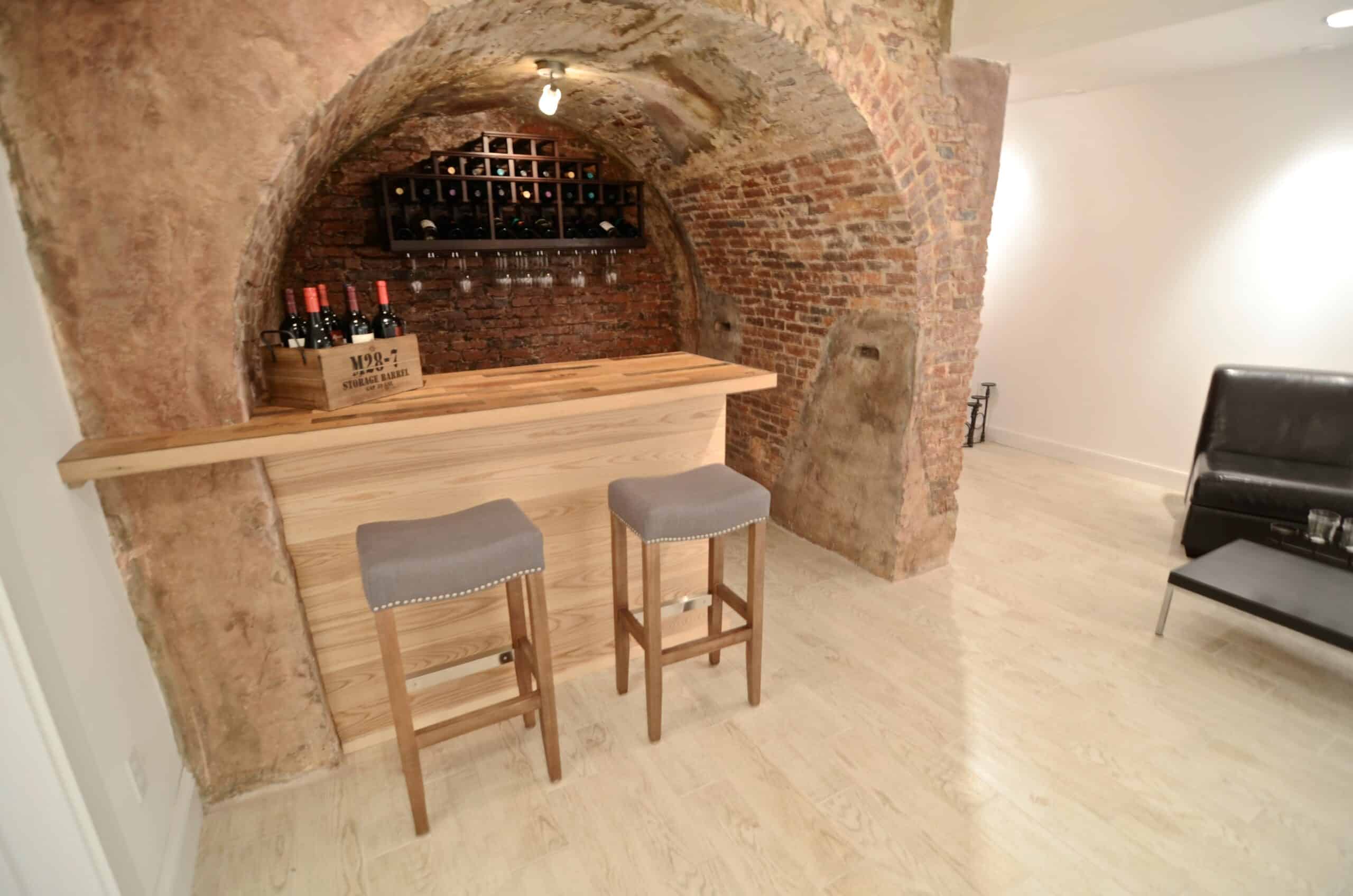
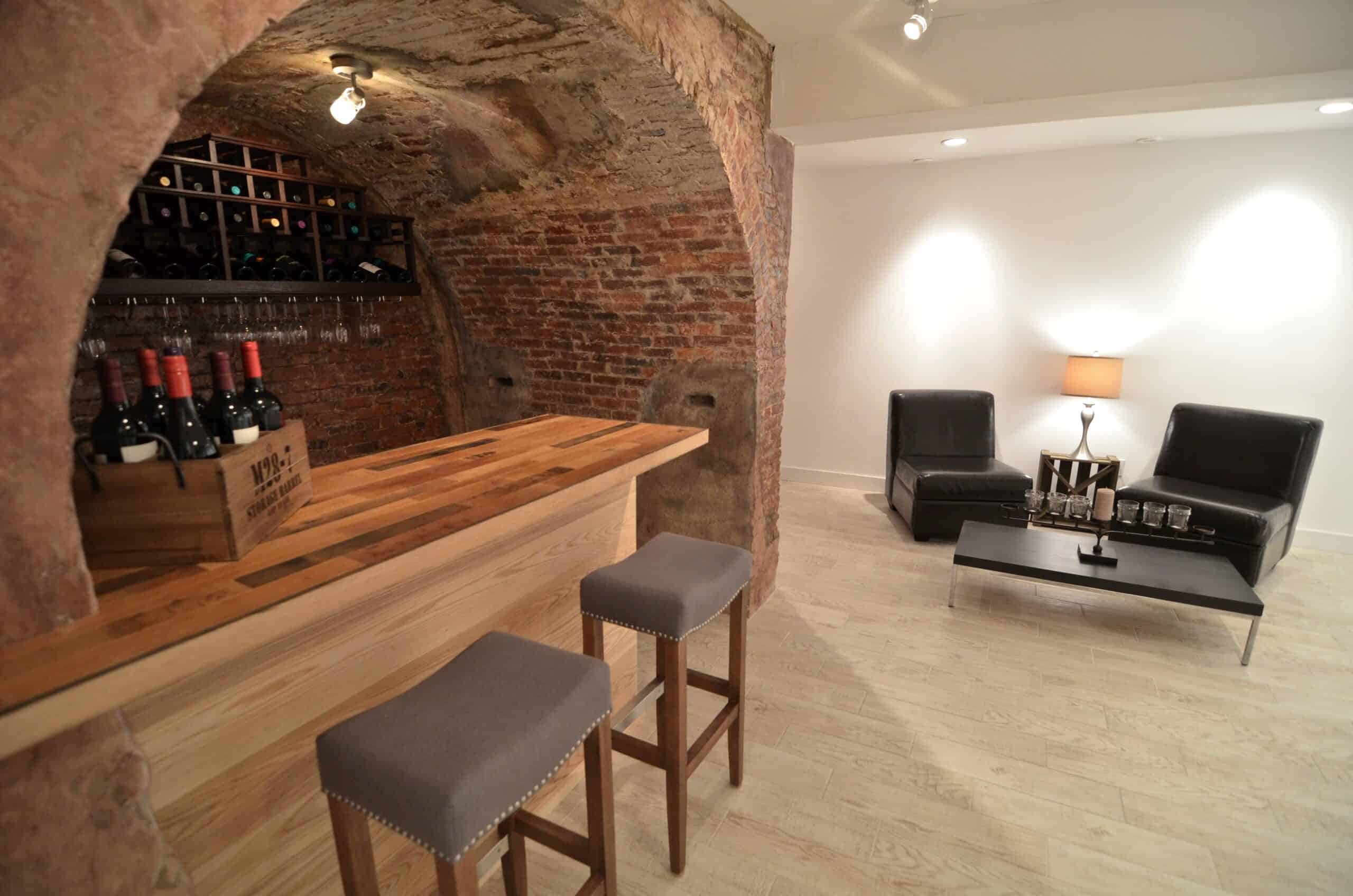
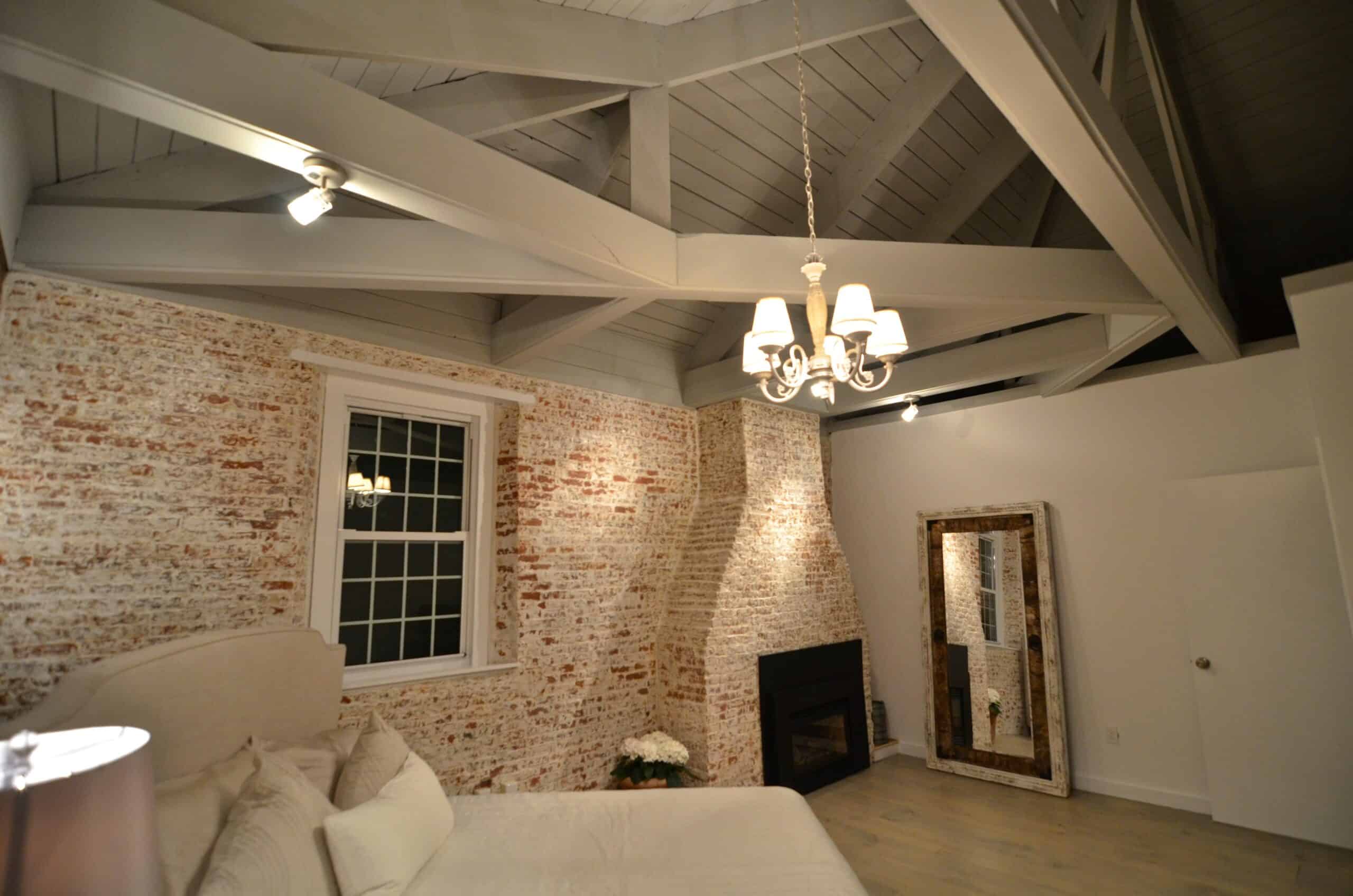
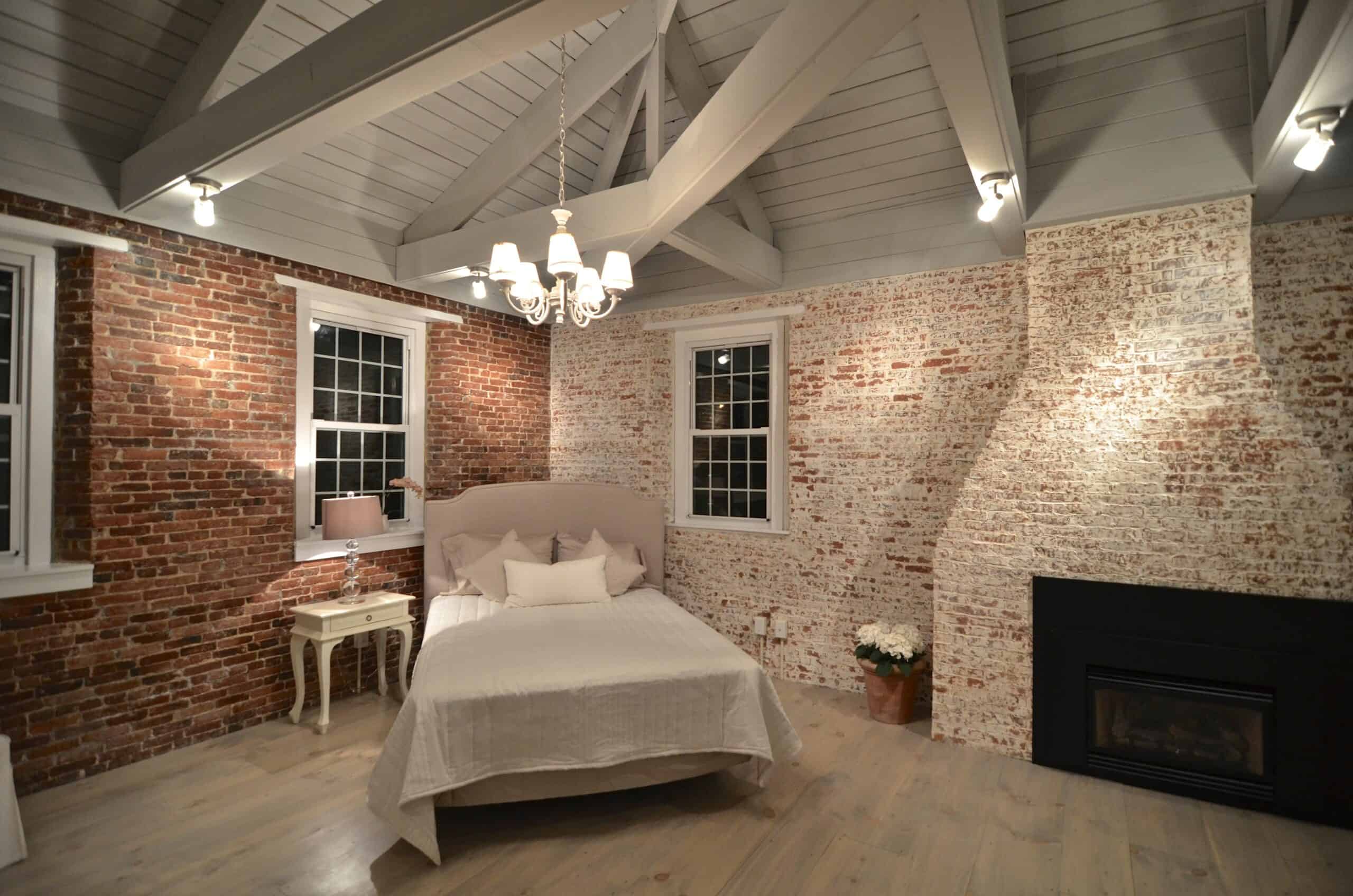
The existing brick fireplace and adjacent wall were uncovered, cleaned, and restored where possible. The fireplace was prepped to be modernized and transformed. The kitchen was gutted, the ceiling was replaced in areas, and the walls were removed to create an open concept living space perfect for entertaining. Major efforts were required on the first floor, a new roof, new windows, rewiring of the entire townhouse, and new concrete in the basement are just a few of the many improvements.
AFTER Completion of the Restoration
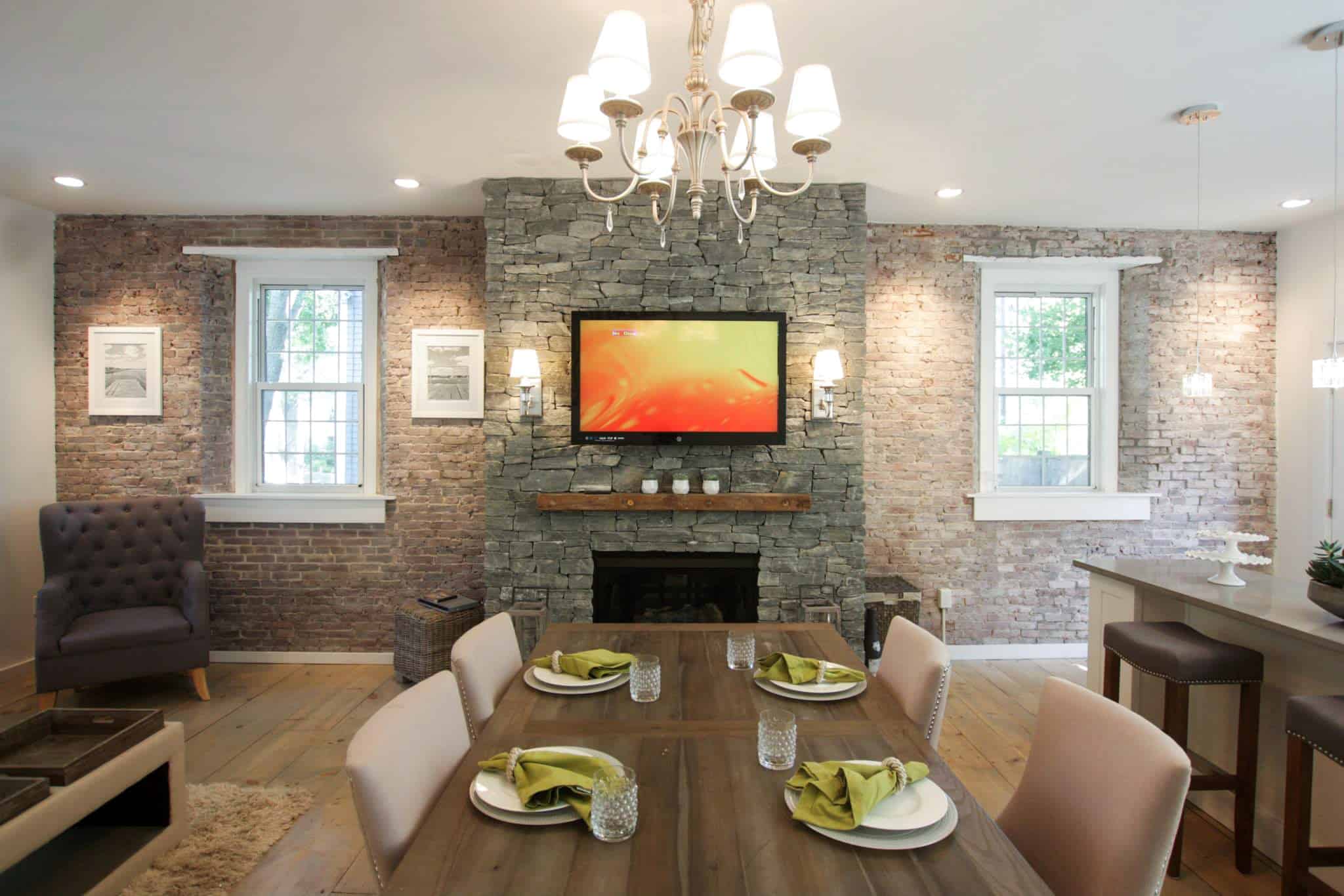
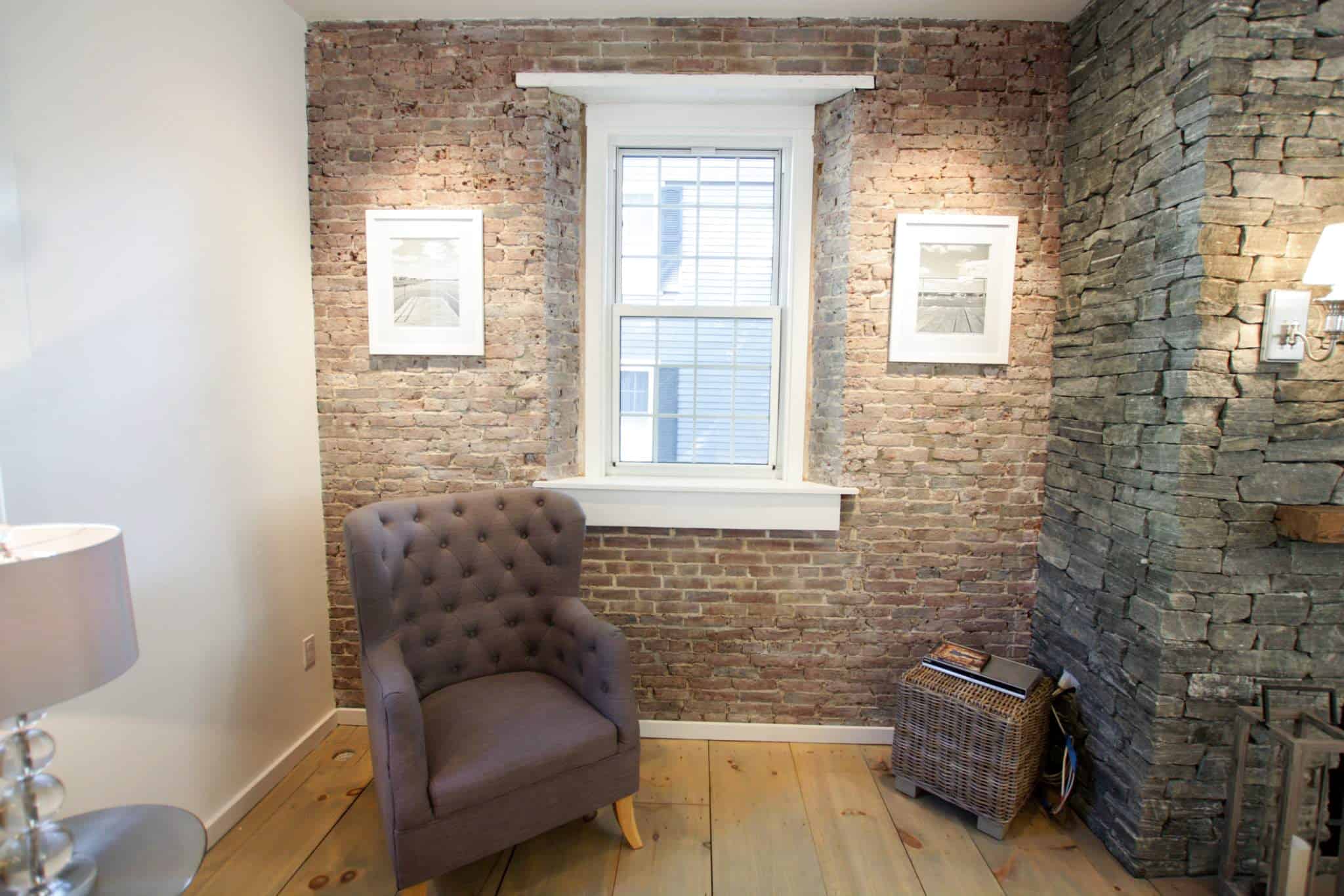
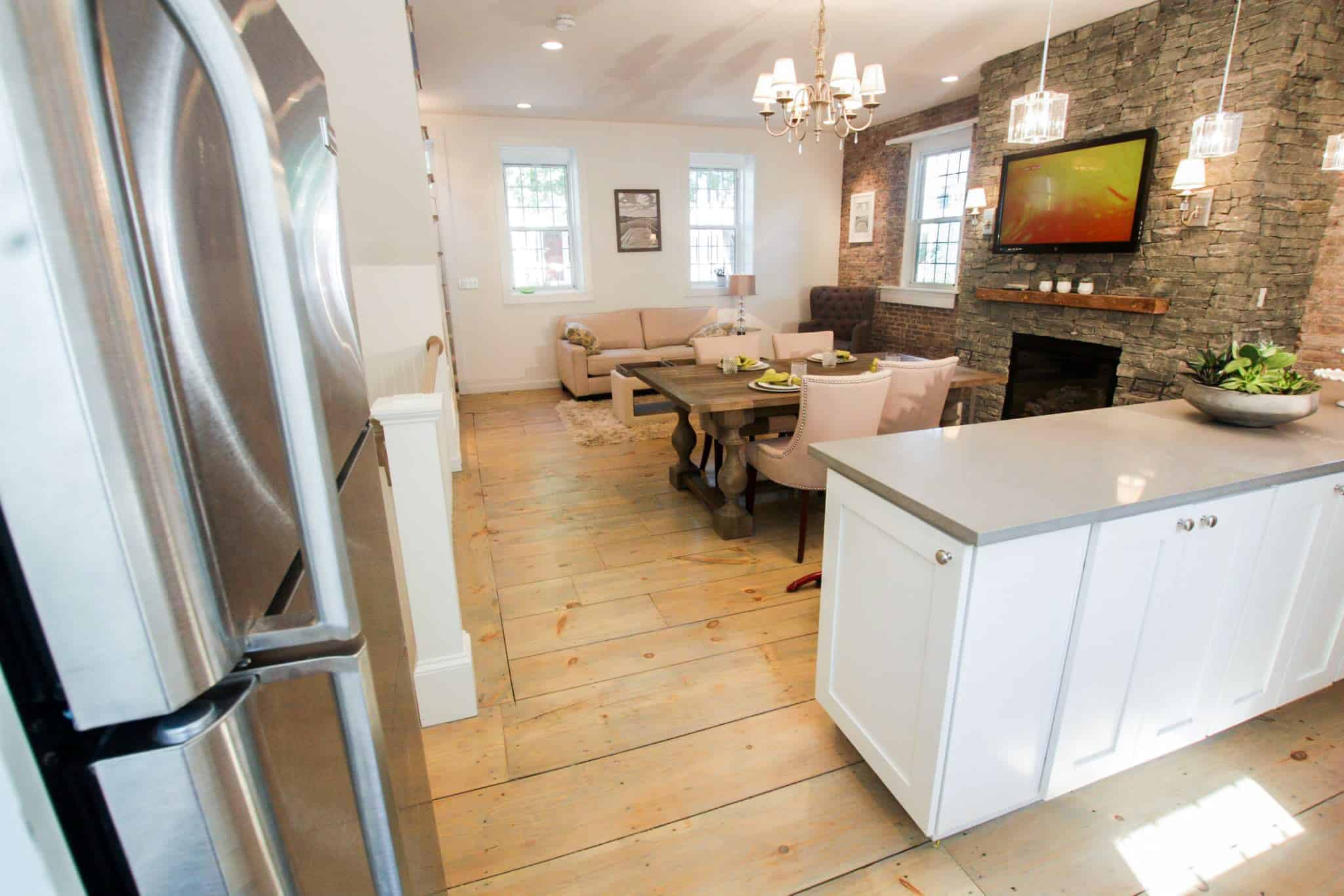
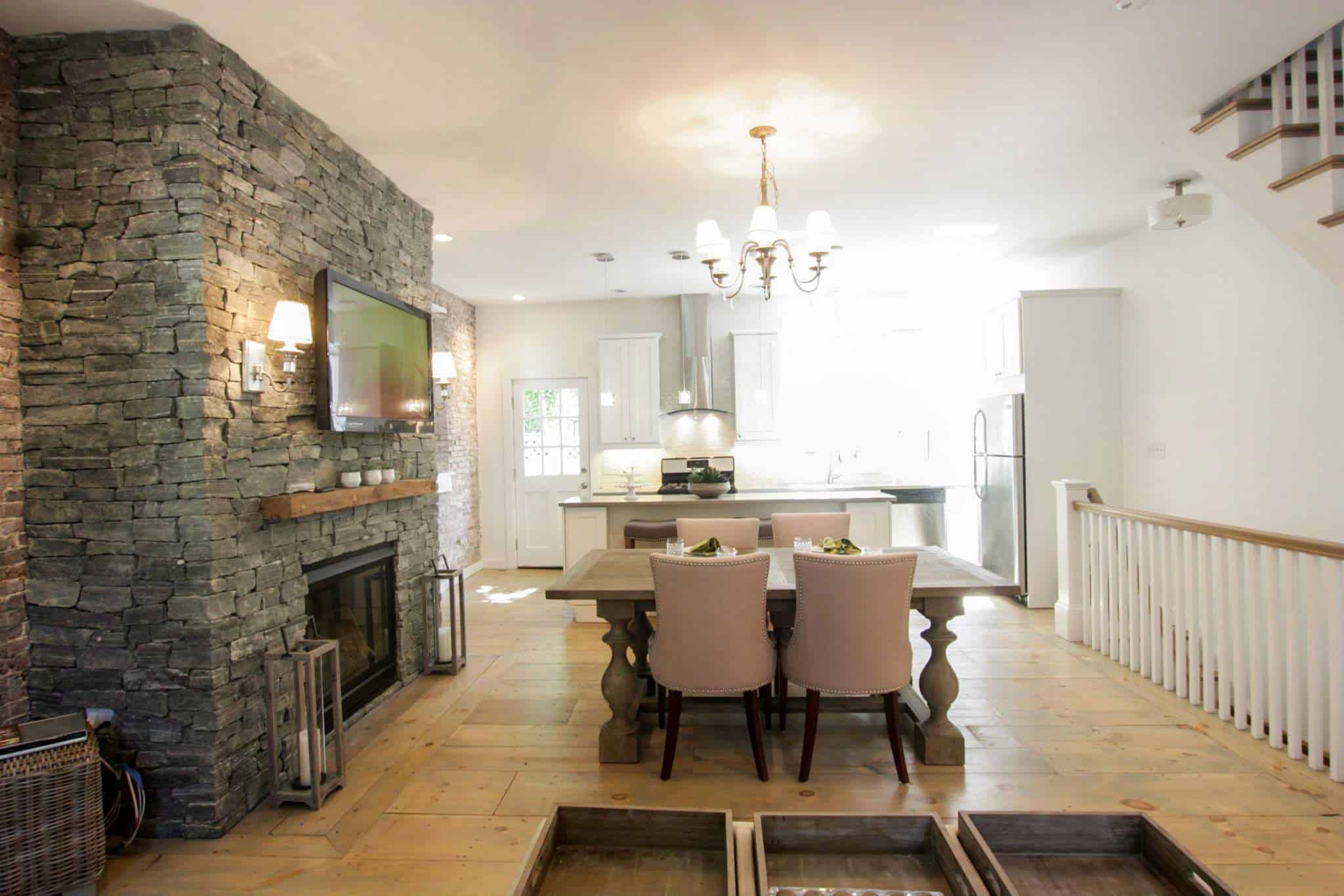
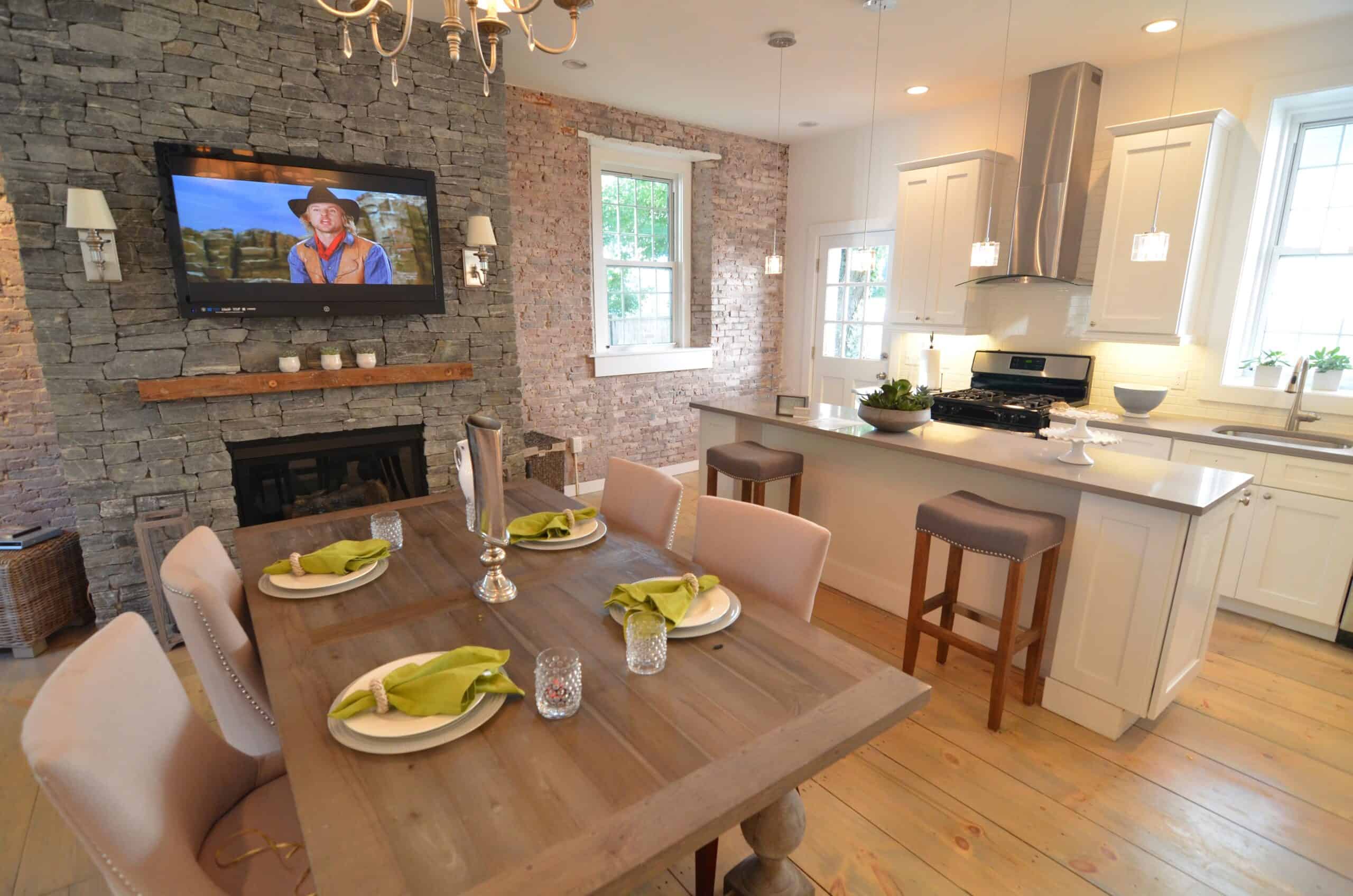
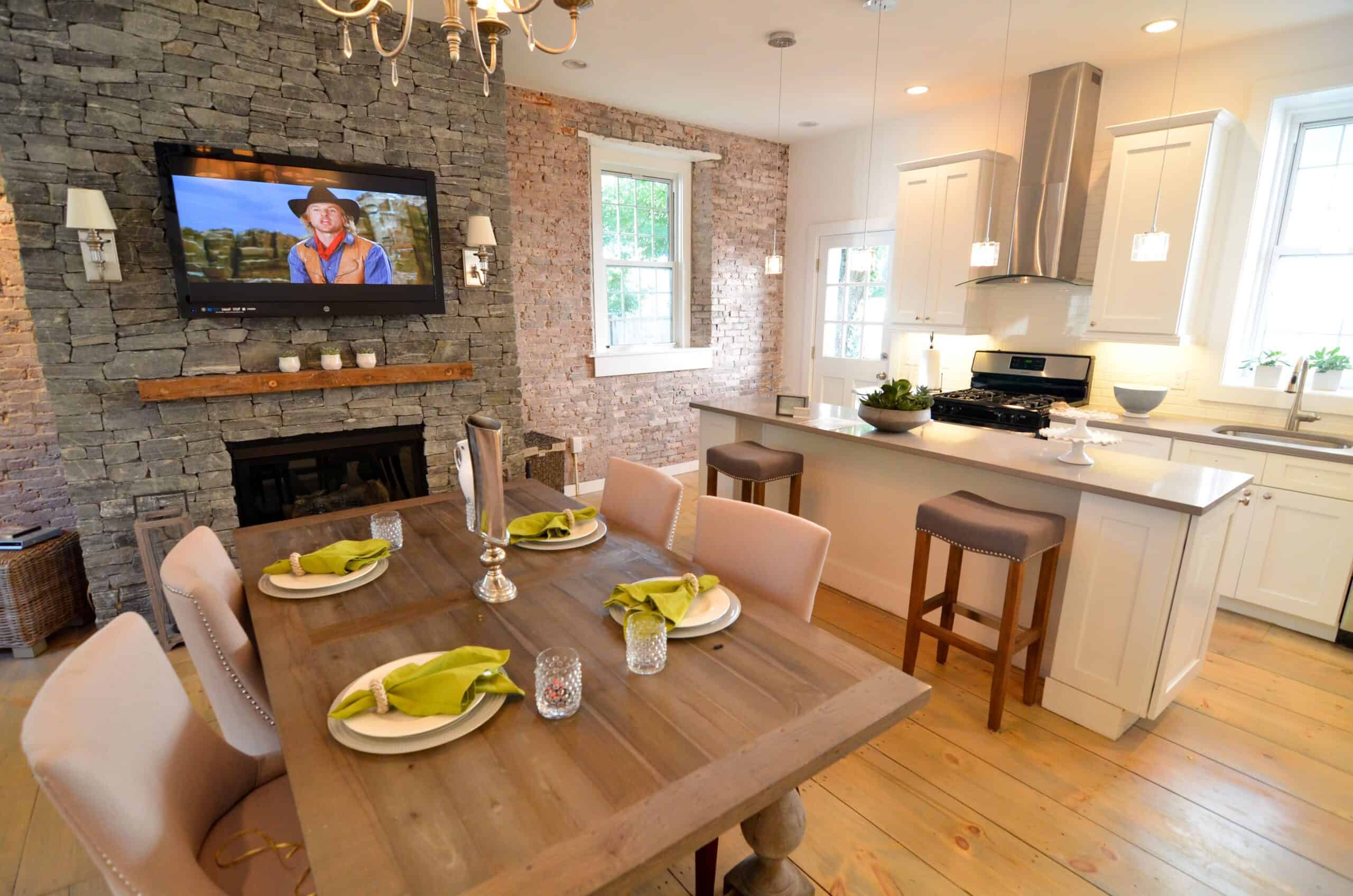
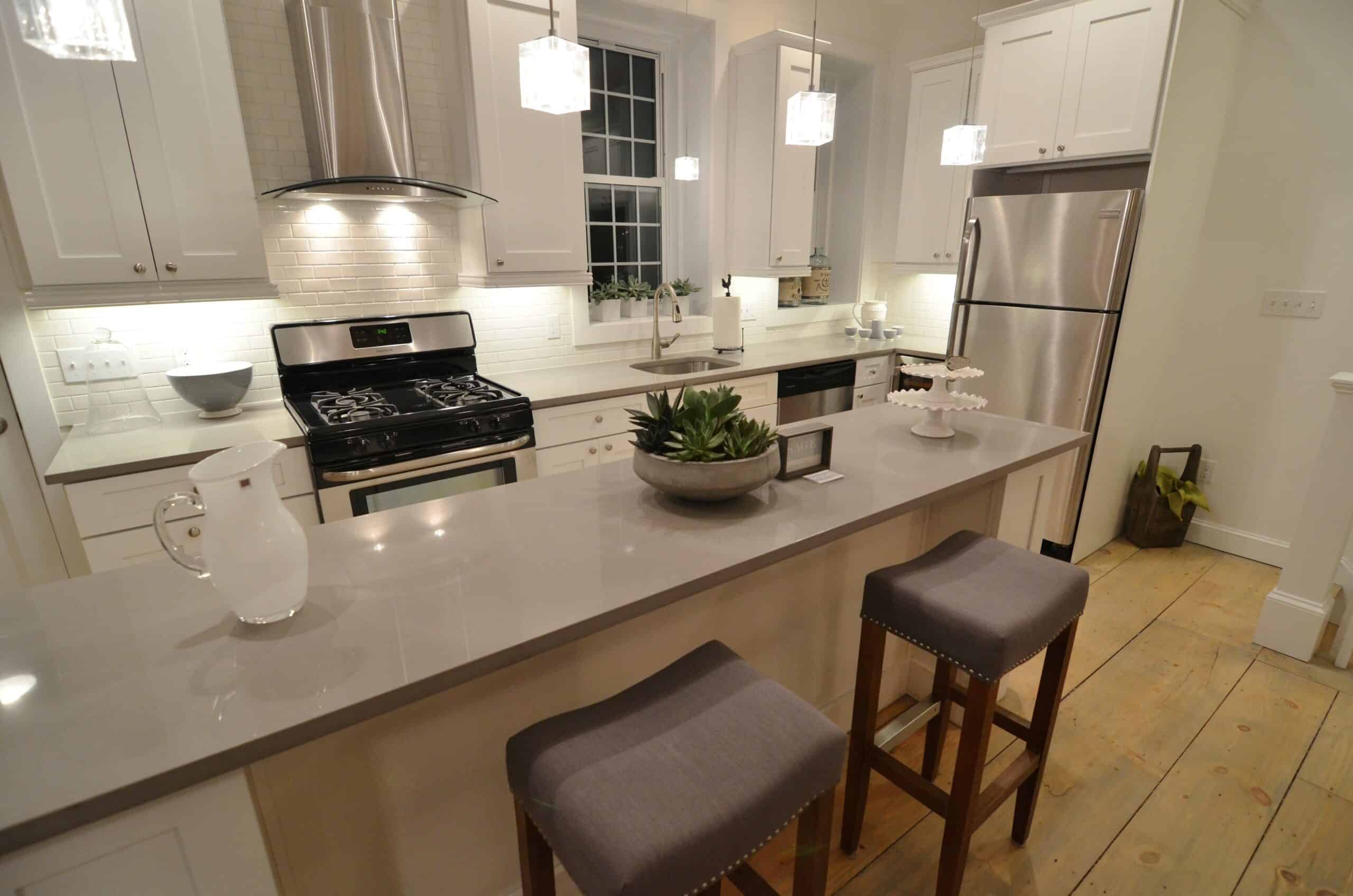
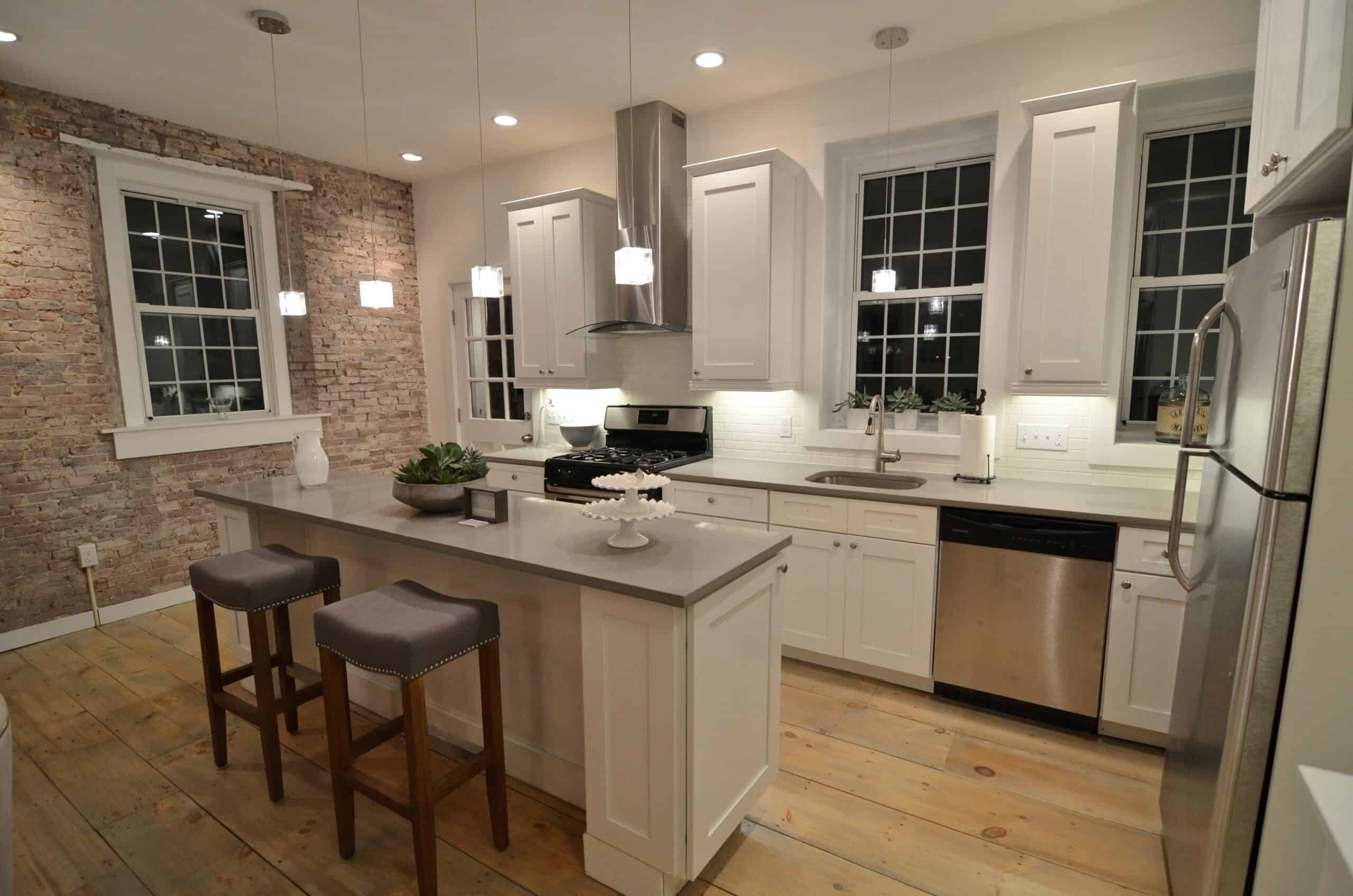
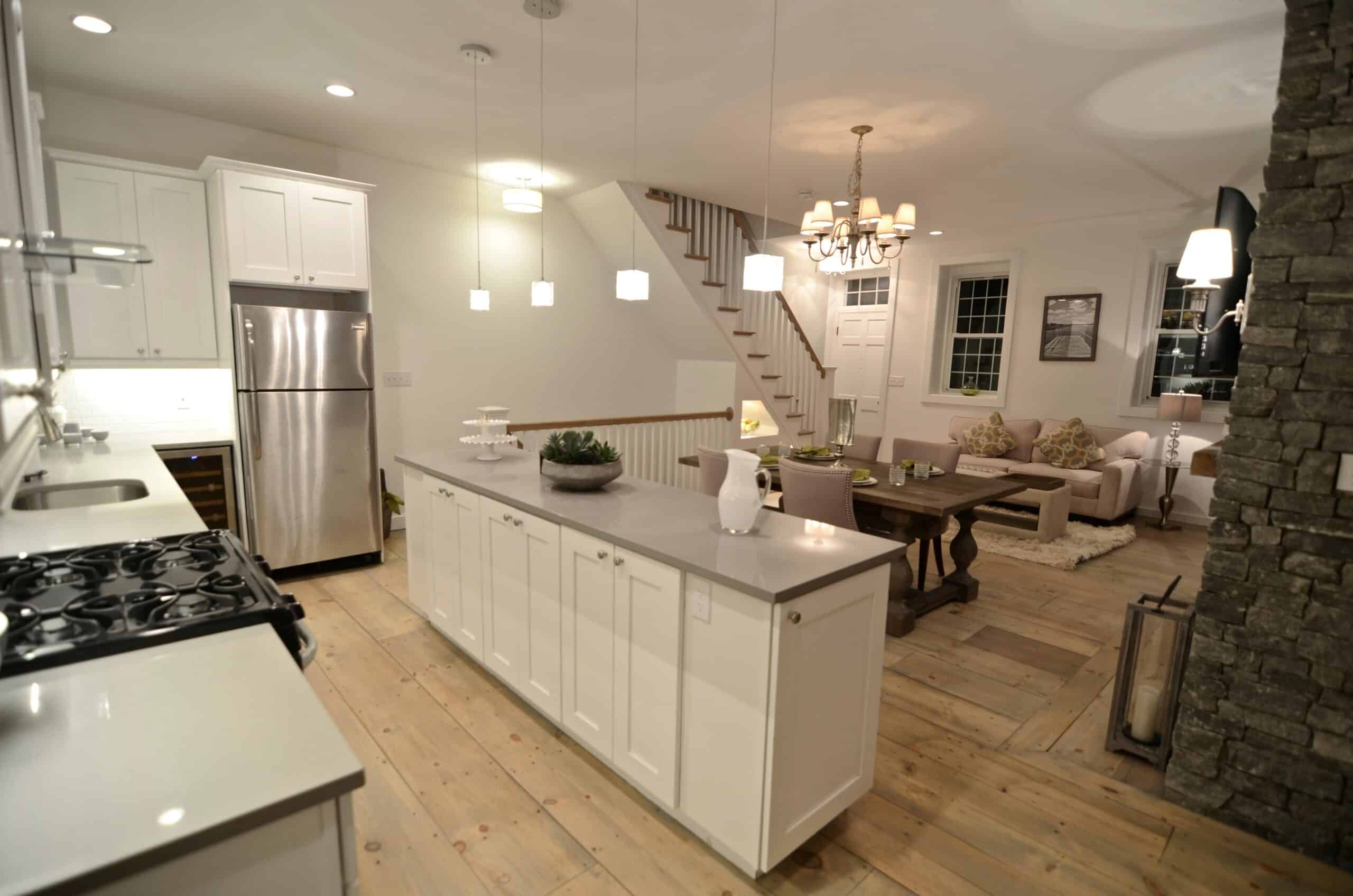
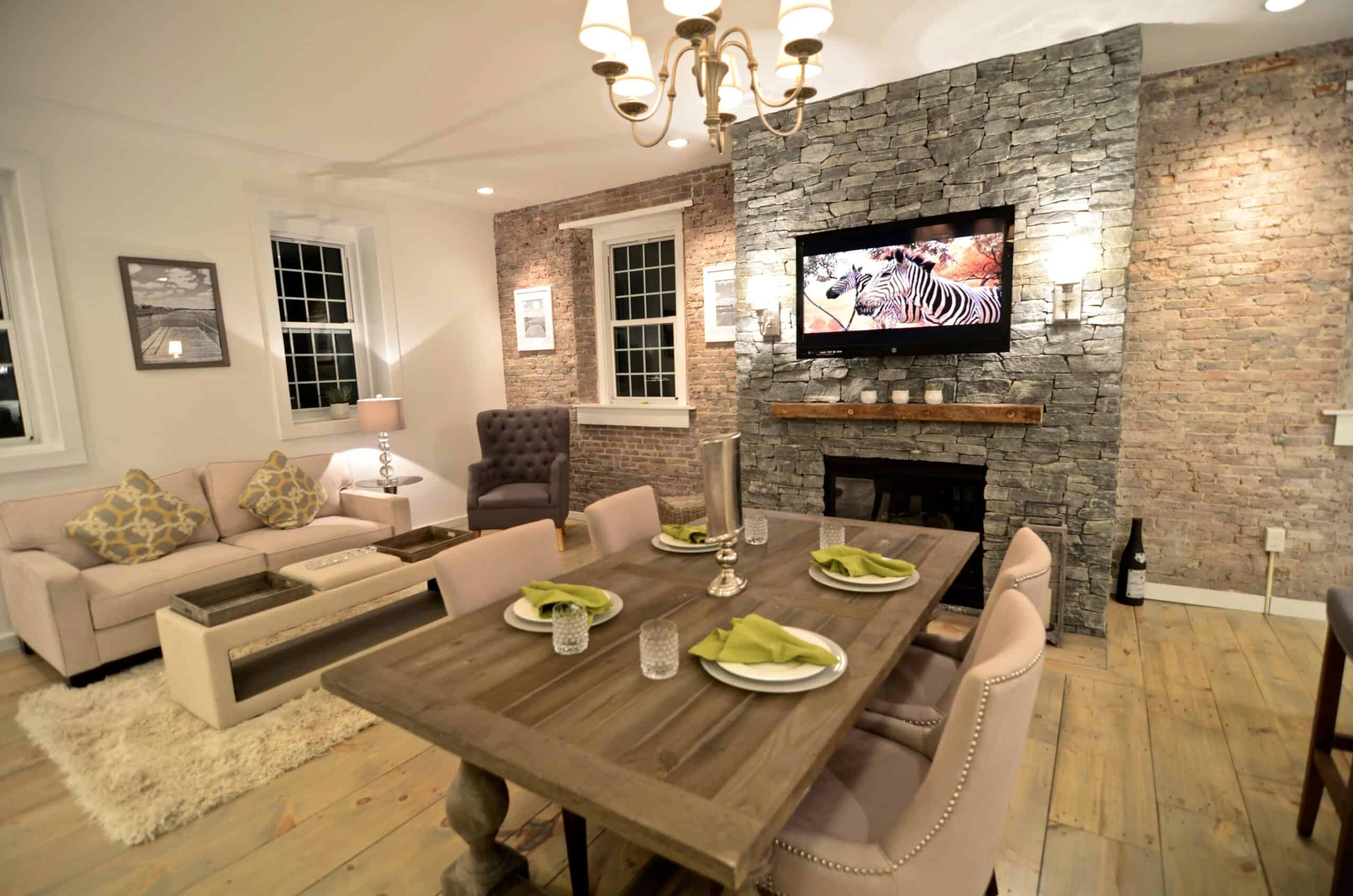
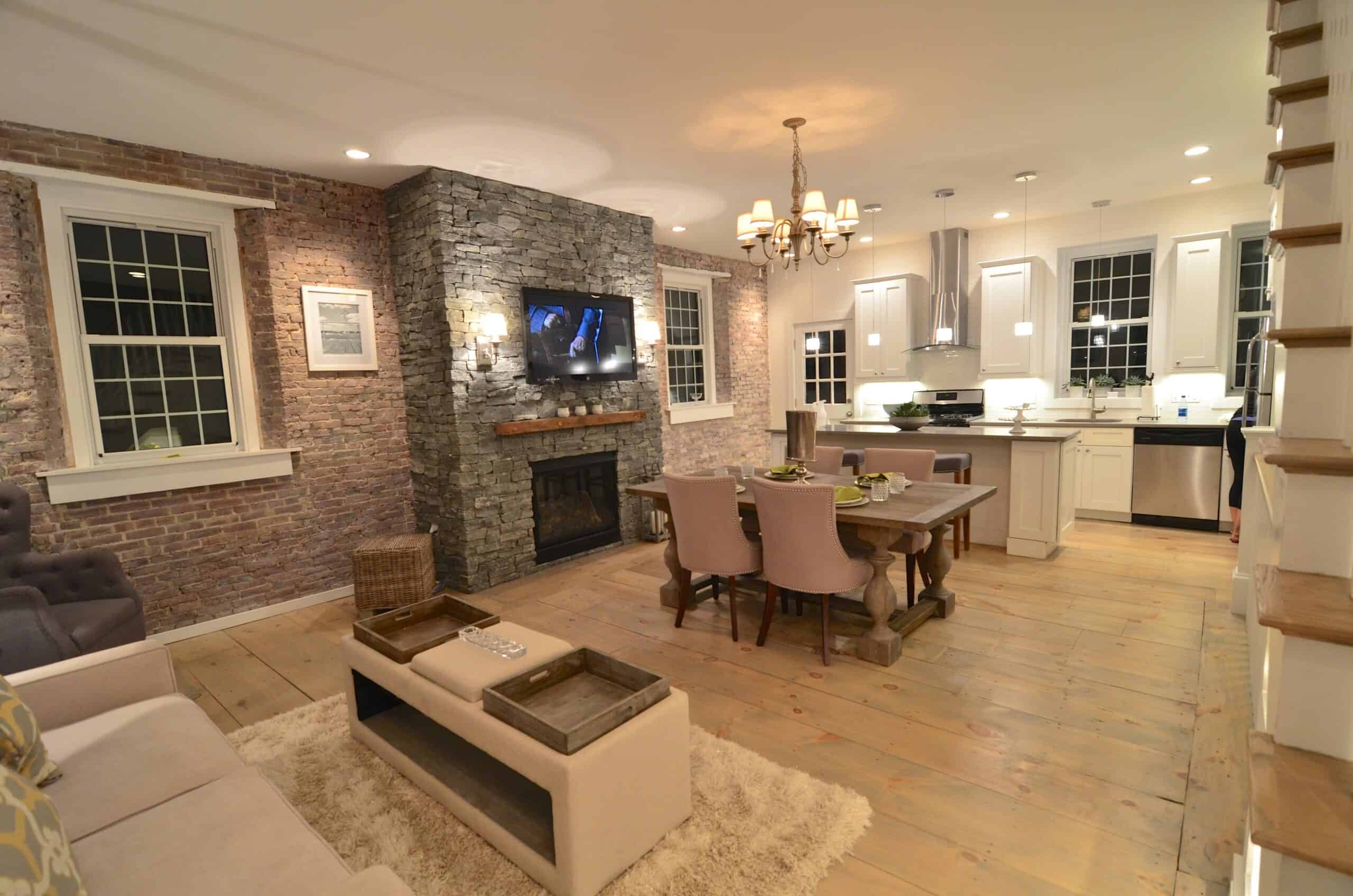
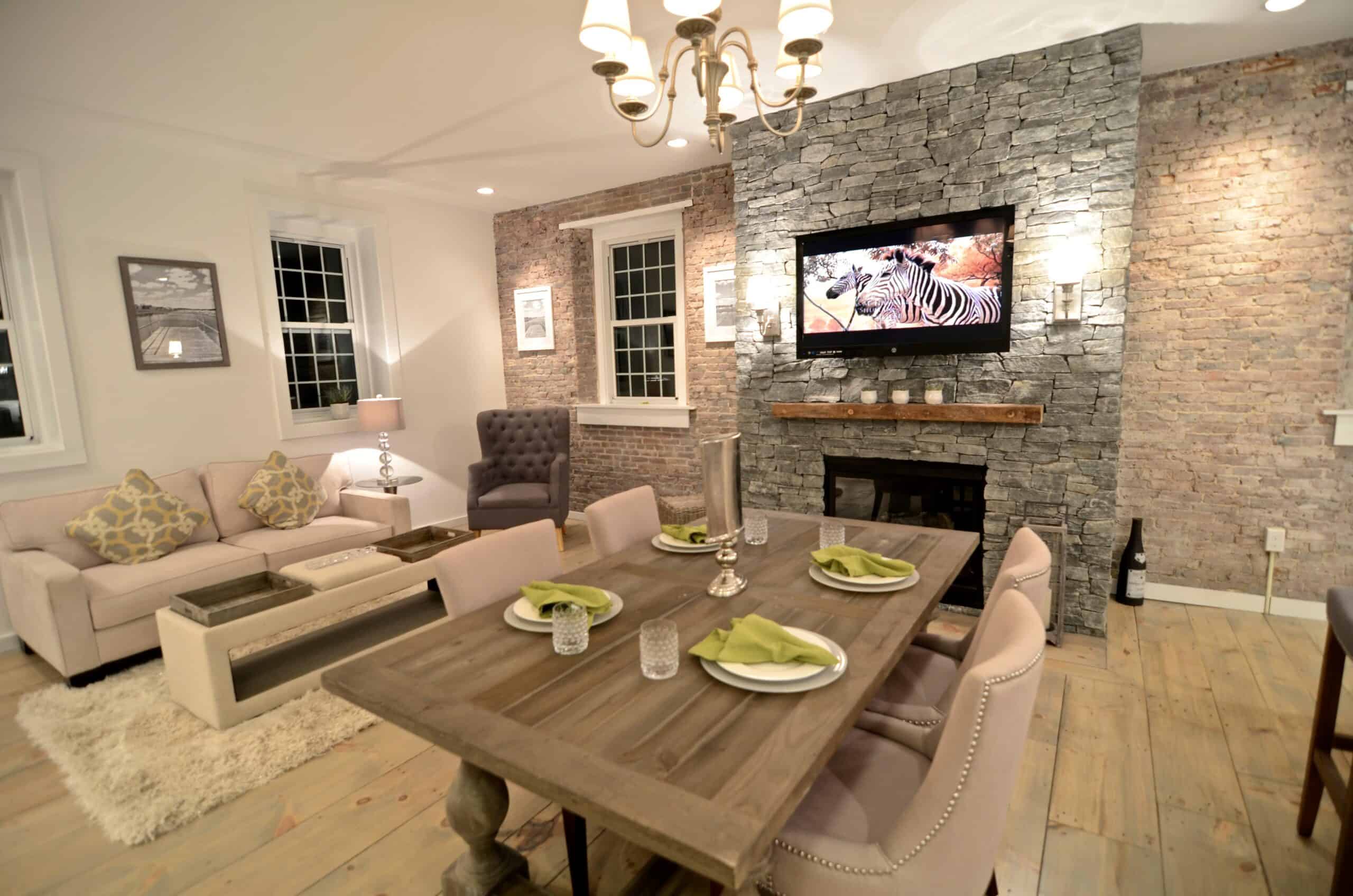
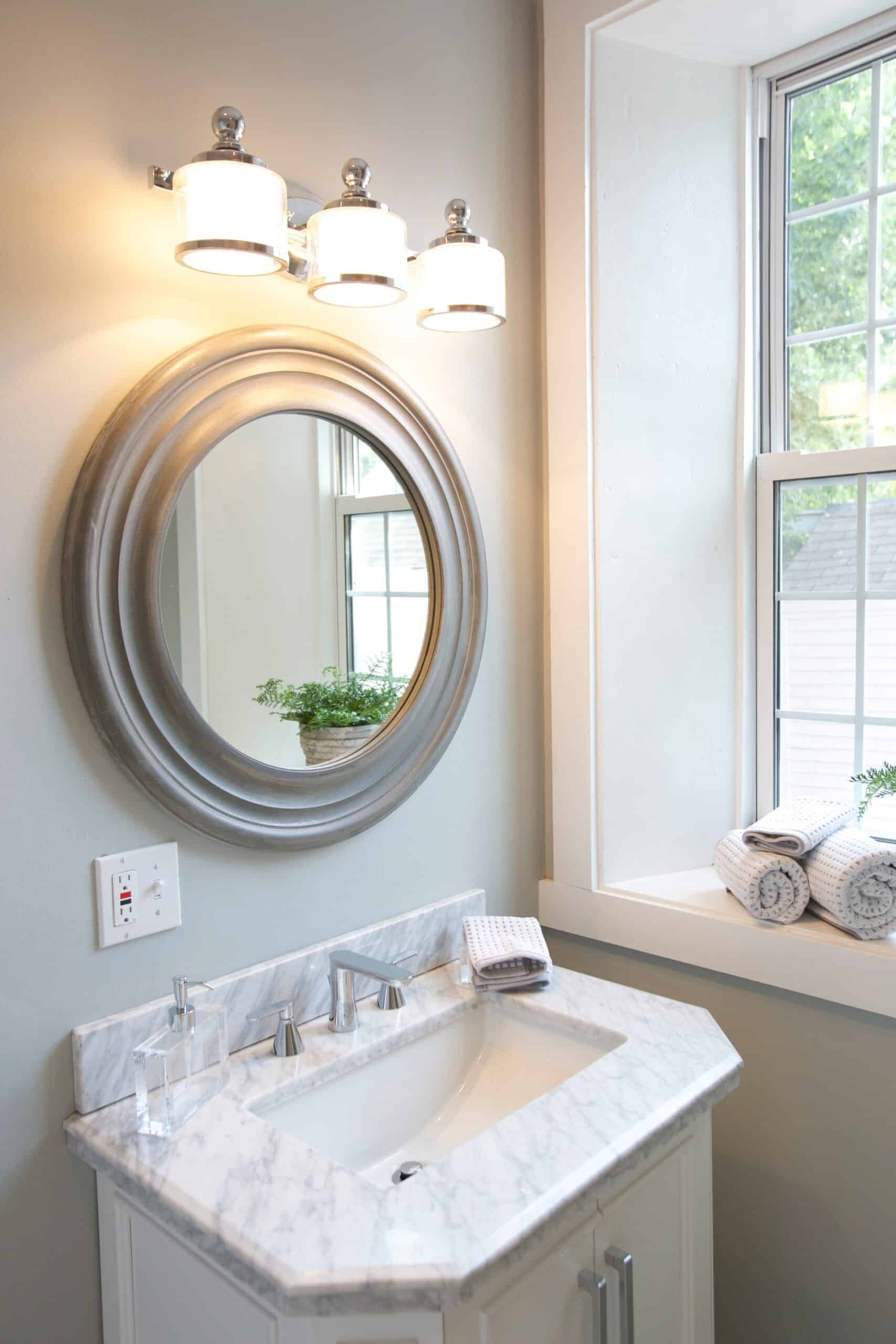
The finished product is simply amazing. The modern appliances, white cabinets, quartz counters, and other kitchen accents seamlessly blend with the exposed brick wall. Greenwich Gray Ledgestone natural thin stone veneer was used on the fireplace adding a pop of color and creating an eye catching focal point. The original wood floorboards were stained with a light gray wash which lightened up the space while still preserving the homes historic appeal. The overall “shabby chic” theme and attention to detail create a warm and inviting space that anyone would love to make their home.

In Summary
Inspiration | Videos | Projects | Visualize | Installation | Literature